
Entrust us with your honeycomb bonding
Enjoy all the benefits of honeycomb to make your parts and machines lighter:
- Lightness
- Strength
- Insulation
- Durability
Honeycomb structures offer many advantages
Honeycomb bonding is a technique used in industry, particularly in the manufacture of composite materials.
This method involves assembling layers of material using a honeycomb structure, generally made from materials such as aluminium, paper or thermoplastics. This structure is valued for its lightness and its high mechanical strength.
The advantages of honeycomb bonding
- Lightness: considerably reduces the weight of structures.
- Strength: provides excellent mechanical and compressive strength.
- Insulation: offers thermal and acoustic insulation properties.
- Durability: resists corrosion and moisture, extending product life.
-
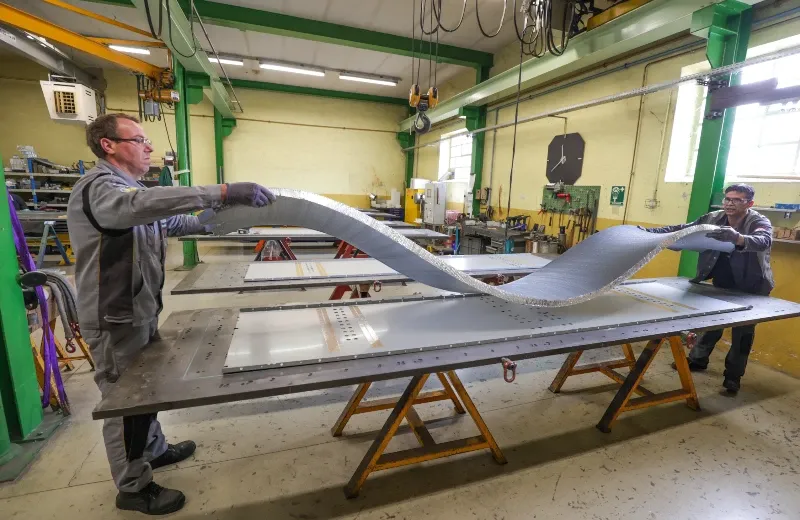
Honeycomb bonding workshop
-
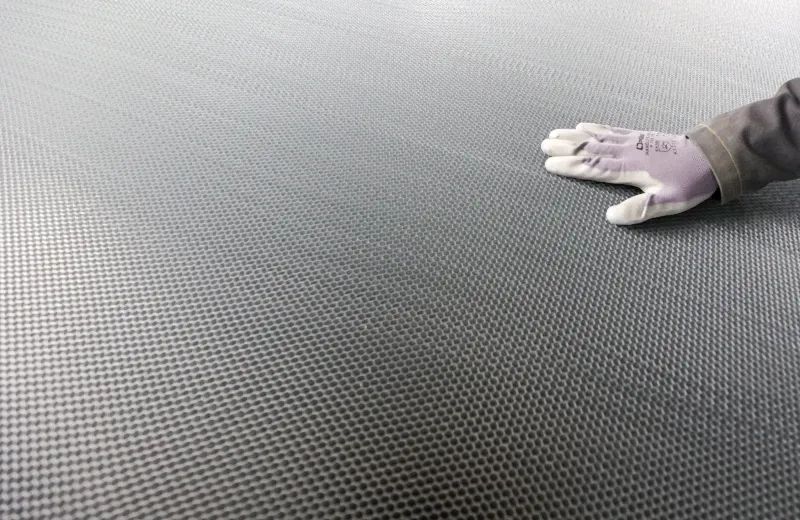
Honeycomb bonding workshop
Recognised expertise in honeycomb bonding
MGR MONNIER ÉNERGIES carries out honeycomb bonding to produce complex parts used in building components for special-purpose machines (tables, surface plates, beams, shock absorbers).
High-quality aluminium honeycomb
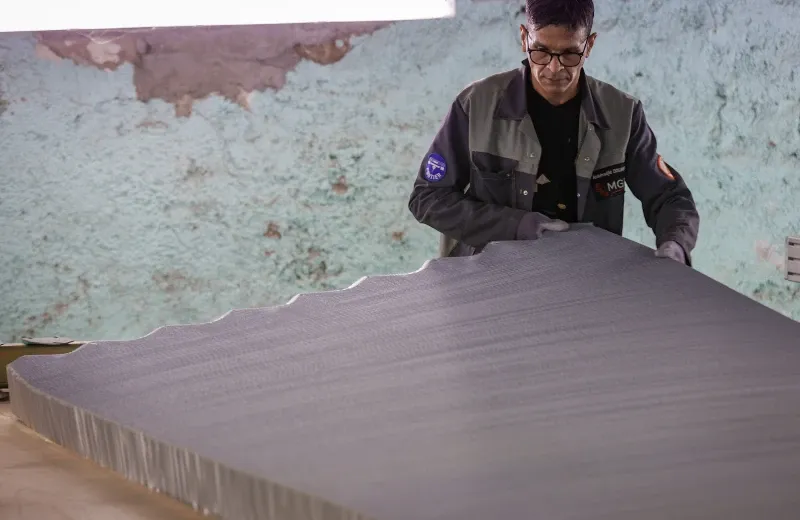
Our high-quality aluminium honeycomb is adapted to customer requirements and can be supplied in different formats thanks to our dedicated cutting machine.
A structure tailored to your needs
Depending on our customers’ requirements, we can achieve different densities and mechanical properties by adjusting the thickness of the aluminium foil and the size of the honeycomb cells.
A controlled manufacturing process
Once cut, the honeycomb is sandwiched between two metal sheets and then bonded to them.
We use adhesives that meet the most stringent requirements. We can adapt them to the customer’s specifications (mechanical stresses, peel testing, temperature, etc.).
Honeycomb bonding meets the needs of many sectors
Honeycomb bonding has a very wide range of applications. We work mainly for the special-purpose machine sector, either on components built directly into the machine (tables, surface plates, beams) or on ancillary machine components (safety shock-absorbing elements).
Special-purpose machinery
Aeronautics and aerospace
Land transport
Construction and architecture
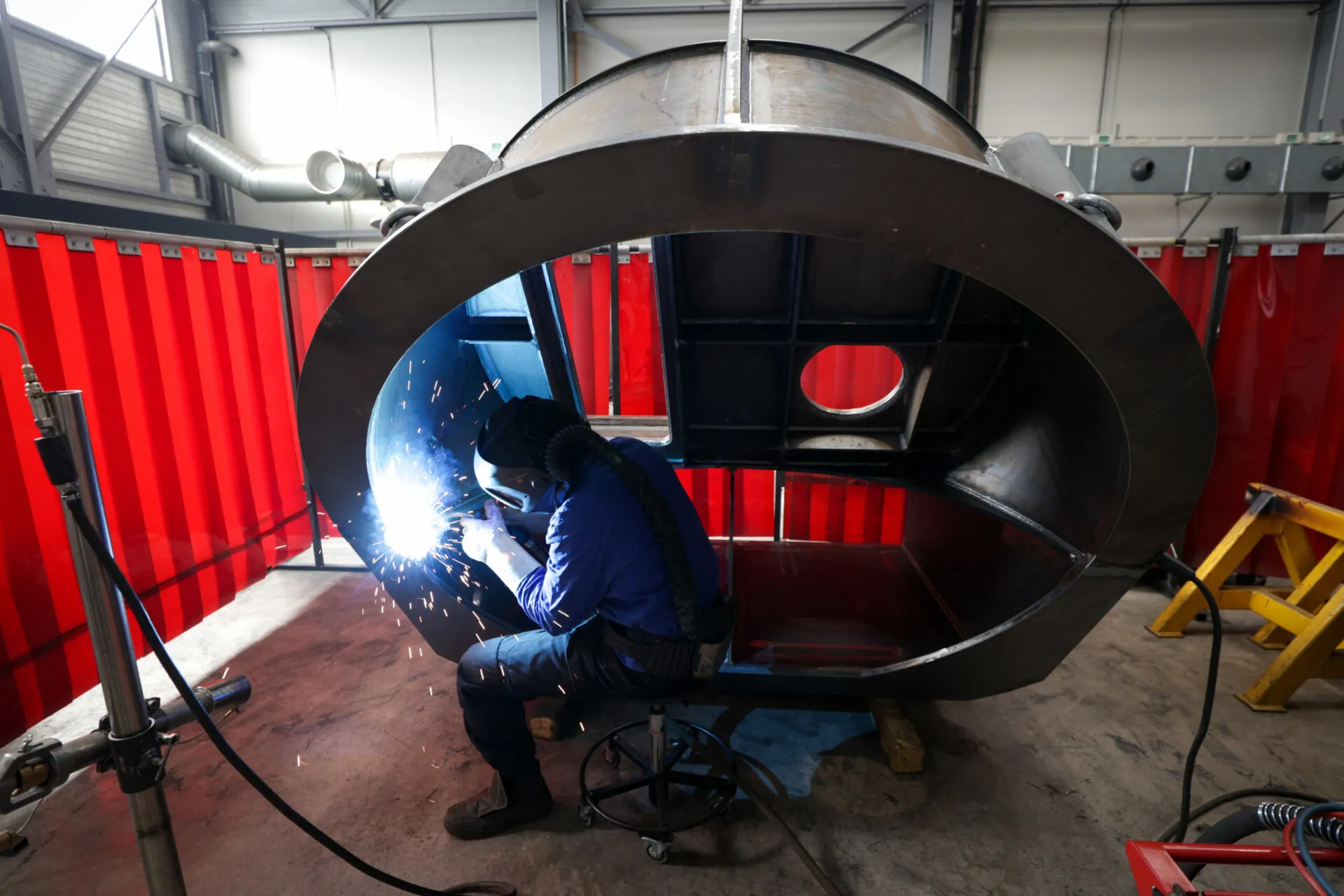
Welded fabrication
More details →
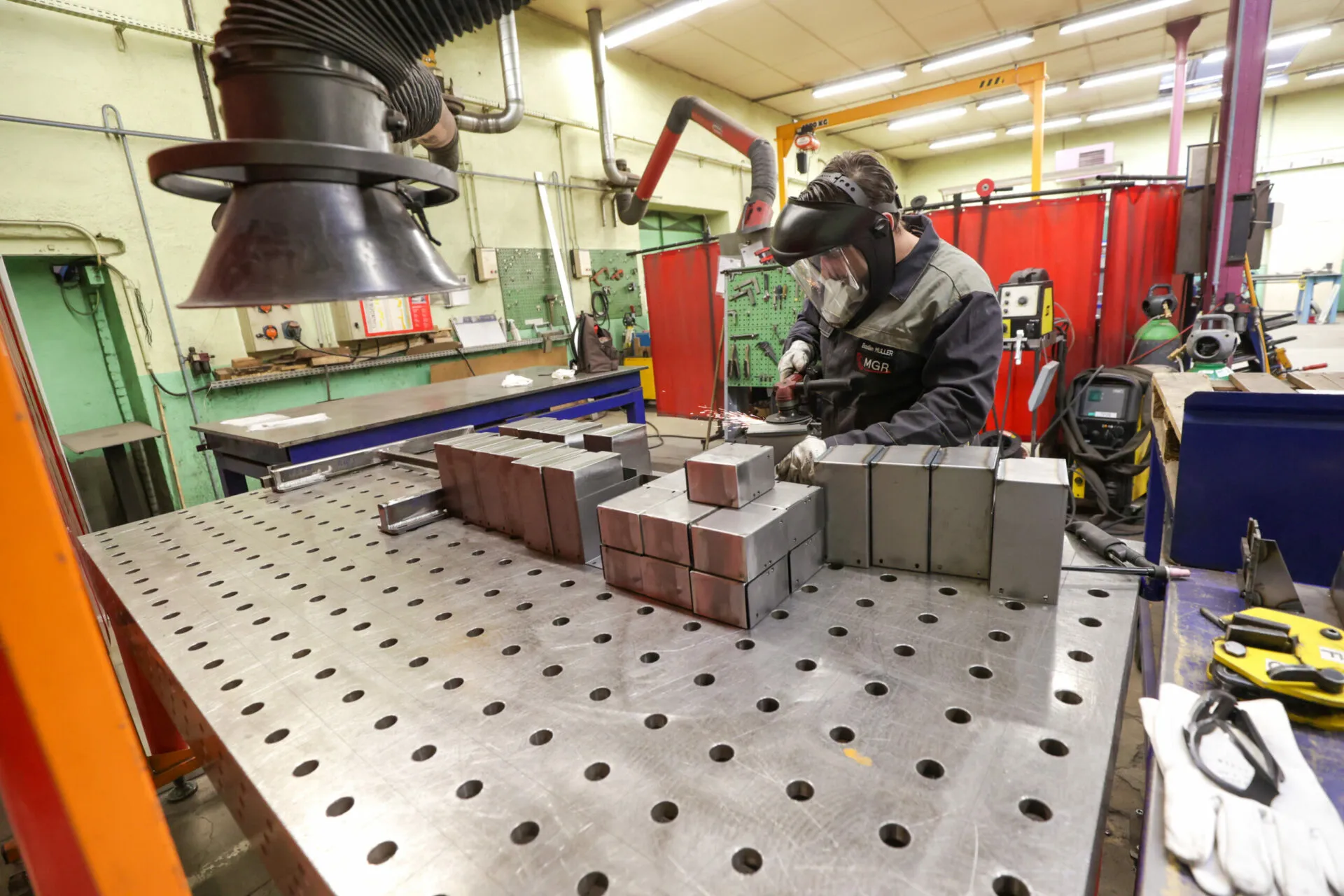
Precision and industrial sheet metal work
More details →
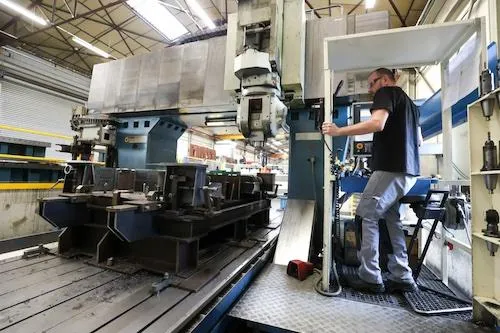
Large-part machining
More details →